
When we talk about skin health, sunscreen is often mentioned – but not always fully understood.
As we mark Skin Cancer Awareness Month this month, it’s important to move beyond the basics and focus on what truly matters: how sun damage occurs, why it accumulates over time, and how small daily habits can significantly reduce long-term risk.
Because the reality is this: skin cancer is one of the most preventable forms of cancer – but only if we take it seriously.
WHY I TAKE SUN PROTECTION SERIOUSLY
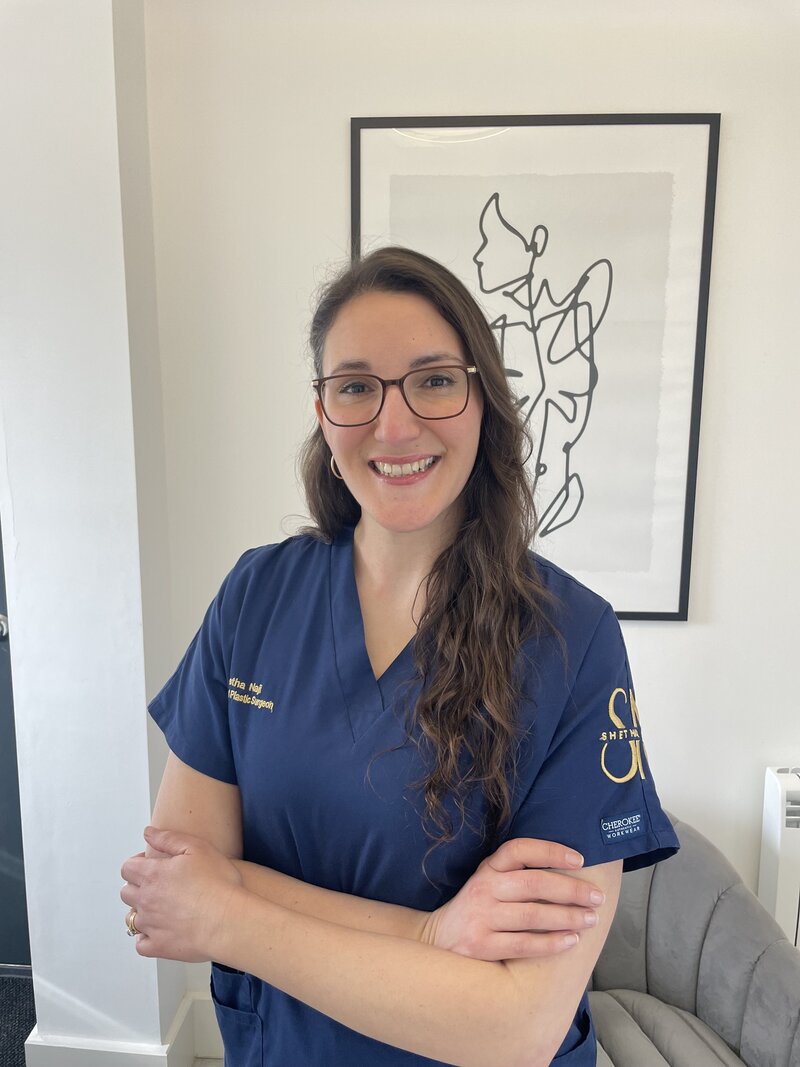
My perspective on sun protection isn’t just professional – it’s shaped by my medical training.
Having worked in both adult and children’s hospitals, I’ve seen first-hand the impact cancer has – not just on patients, but on families. While not all cancers are preventable, skin cancer is one area where education and early intervention can make a meaningful difference.
That is why I place such strong emphasis on prevention.
Because what you do consistently, day to day, matters far more than what you do occasionally.
WHAT CAUSES SKIN CANCER?
The primary cause of most skin cancers is exposure to ultraviolet (UV) radiation – from both the sun and artificial sources such as sunbeds.
UV radiation damages the DNA within skin cells. Over time, this damage accumulates, leading to abnormal and uncontrolled cell growth.
While individuals with lighter skin types and/or genetic predispositions may be more susceptible, all skin types can be affected. Repeated or prolonged exposure significantly increases risk.
UNDERSTANDING UVA AND UVB: WHY BROAD-SPECTRUM SPF MATTERS
Not all UV radiation behaves in the same way.
UVB rays
- Cause sunburn; remember “B is for Burn”
- Play a direct role in the development of skin cancer
UVA rays
- Penetrate deeper into the skin
- Drive premature ageing (collagen breakdown, pigmentation, laxity); remember “A is for Ageing”
- Are present all year round and can pass through glass
The key point is simple: you need protection from both.
This is why a broad-spectrum SPF is essential – it protects against both UVA and UVB damage.
WHY SPF IS NOT JUST FOR HOLIDAYS
A common misconception is that sunscreen is only necessary in hot weather, on holiday, or for fair skin.
In reality:
- UV rays penetrate cloud cover
- UVA rays pass through windows (including cars and offices)
- Exposure is cumulative over time
This means that even low-level, daily exposure contributes to:
- Skin ageing
- Pigmentation
- Long-term cellular damage
Sun damage is not always immediate – but it is continuous.
THE MOST COMMON SUNSCREEN MISTAKES I SEE
Even among well-informed patients, there are consistent patterns:
-
Not Applying Enough
Most people significantly under-apply sunscreen.
As a basic and minimum guide:
- A teaspoon or the two-finger rule for the face and neck
- A full shot glass amount for the body
Anything less reduces the level of protection stated on the product.
-
Not Reapplying
Sunscreen is not a one-time application.
It breaks down with:
- Time
- Sweat
- Touch
- Environmental exposure
Reapplication every two hours – especially in direct sunlight – is essential. Sweating, swimming means you need to reapply.
-
Missing Key Areas
This is one of the most overlooked issues.
Commonly missed areas include:
- Neck
- Ears
- Hands
- Décolletage
- Scalp (particularly partings or thin/bald areas)
- Lips
- Feet
These are often the areas where we see the earliest and most visible signs of sun damage.
WHAT I WISH EVERYONE UNDERSTOOD ABOUT SUN DAMAGE
If there is one message I emphasise to patients, it is this:
Prevention is always better than treatment
We have excellent treatments for pigmentation, skin ageing, and even pre-cancerous changes. But no intervention is more effective than preventing the damage in the first place.
Skin Cancer Is Largely Preventable
With:
- Consistent SPF use
- Early education
- Regular skin awareness
Risk can be significantly reduced. In fact, the majority of melanoma cases are preventable.
Daily Habits Matter More Than Occasional Effort
It’s not about what you do on holiday.
It’s about:
- The sunscreen you apply before leaving the house
- The areas you remember – or forget
- The consistency of your routine over time
These small decisions add up.
MOST COMMON SKIN CANCERS
Basal Cell Carcinoma
The most common form. Often appears as a pearly-edged nodule or a sore that doesn’t heal, typically on sun-exposed areas such as the face.
Squamous Cell Carcinoma
May present as a firm red bump or scaly patch. It can spread if left untreated.
Melanoma
The most serious form of skin cancer.
It develops in melanocytes and can occur anywhere on the body – including less obvious areas such as the soles of the feet, under the nails, or the palms.
Although less common, melanoma is the most dangerous due to its ability to spread rapidly.
Early detection is critical. Sadly, melanoma is a cancer of young people. If you have any changing or worrying lesions, please get them checked.
HOW TO CHECK YOUR SKIN: THE ABCDE GUIDE
Regular self-examination is essential.
Look for:
- A – Asymmetry: one half doesn’t match the other
- B – Border: irregular or blurred edges
- C – Colour: uneven or multiple shades
- D – Diameter: larger than a pencil eraser
- E – Evolving: any change in size, shape, colour or texture
If anything looks new, unusual, or changing – have it assessed promptly. If in doubt, check it out!
COMMON SIGNS TO WATCH FOR
- A new or changing mole
- A lump or raised area
- Scaly, crusted or rough patches
- Sores that do not heal
- Changes under nails, or on palms and soles
If in doubt, seek medical advice.
A SIMPLE APPROACH TO BETTER PROTECTION
- Use a broad-spectrum SPF 30 or higher every day
- Apply it as the final step in your morning routine
- Reapply when outdoors or exposed for prolonged periods
- Avoid peak UV hours (10am–4pm where possible)
- Wear protective clothing, hats and sunglasses
- Seek shade when you can
- Avoid sunbeds entirely
And importantly – check your skin regularly.
PLEASE AVOID SUNBEDS!
Sunbeds significantly increase your risk of melanoma, even with occasional use.
The visible effects of damage may take years to appear, but the cellular damage begins immediately.
There is no safe way to tan using UV exposure.
TANNING HORMONES
Please avoid these! They are largely unregulated, untested and unlicenced. They are simply a gamble with your health.
FINAL THOUGHTS
Skin cancer awareness is not about creating fear – it’s about creating understanding.
With the right knowledge and consistent habits, much of the damage we see clinically can be prevented.
And that is always the goal: to protect skin health long before treatment is ever needed.
If you would like personalised advice on protecting or restoring your skin, you are always welcome to get in touch.
Email: contact@shethanaji.com
Tel: +44 (0) 7903 159640