
As a Consultant Plastic Surgeon, diagnosing and treating skin cancers has been commonplace. For those who know me, you know how passionate I am about sun protection, avoidance of sunbeds and especially children’s skin. I truly cannot abide seeing children burn or even worse, babies!
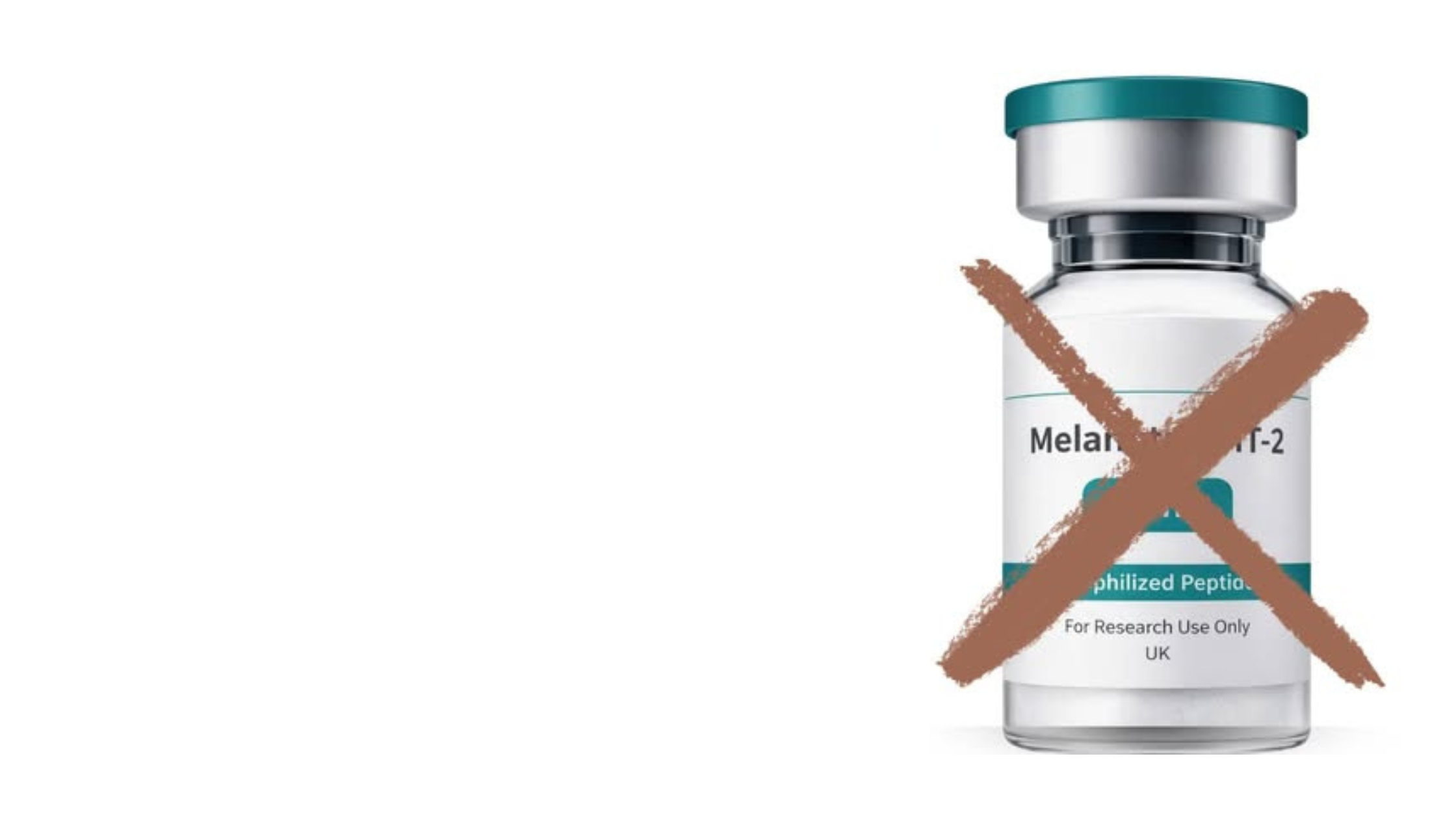
There has been growing interest in the use of Melanotan II, particularly among younger people seeking a darker tan, sometimes in combination with sunbed use. Melanotan II is a synthetic hormone that stimulates melanin production, but its use remains controversial. The increasing popularity of such tanning methods prompts important questions about regulation, safety, consumer education, and the potential health consequences associated with these products and practices.
If you are considering using Melanotan II, or have seen it promoted on social media platforms such as TikTok or Instagram, it is important to understand what it is and why many healthcare professionals are concerned about it.
WHAT IS MELANOTAN II?
Melanotan II (MT2) is a synthetic peptide that mimics the effects of alpha-melanocyte stimulating hormone (α-MSH), a naturally occurring hormone involved in the production of melanin. It is a variant of Melanotan, reported to be stronger in its efficacy.
Melanin is the pigment responsible for skin colour and tanning. By stimulating melanocytes – the pigment-producing cells, Melanotan II can cause the skin to darken, often with less sun exposure than would otherwise be required.
The product is commonly sold online as injections or nasal sprays. Despite its growing popularity, Melanotan II is not licensed in the UK nor has it undergone the rigorous testing required for approved medicines. It is unregulated and it is illegal to sell and supply any Melanotan-containing products in the UK.
WHY ARE PEOPLE USING IT?
Social media has played a major role in the popularity of Melanotan II.
Many users are attracted by claims that it can provide a darker tan quickly and with less exposure to ultraviolet (UV) radiation. Some online influencers even suggest that it offers a safer alternative to sunbathing or sunbeds.
Unfortunately, there is no safety data, quality control or regulation to even know what is in the products. There is, however, growing data of adverse side effects from taking Melanotan II.
THE RISKS OF MELANOTAN II
One of the challenges with Melanotan II is that it is unregulated. Products purchased online may contain different ingredients, varying doses, or contaminants that are not listed on the label.
Reported side effects include:
- Nausea and vomiting
- Facial flushing
- Loss of appetite
- Fatigue
- Headaches
- Increased blood pressure
- Flu-like symptoms
- Changes in libido
- Prolonged or painful erections in men which may require emergency treatment
Because these products have not been adequately studied, the full range of potential long-term effects remains unknown.
CHANGES IN MOLES AND PIGMENTED LESIONS
Perhaps the most concerning issue from a skin cancer perspective is the effect Melanotan II may have on moles and pigmented skin lesions.
Users frequently report existing moles becoming darker or larger, while new pigmented lesions may appear during treatment.
For those of us involved in skin cancer diagnosis, this is particularly worrying. Changes in colour, size and appearance are some of the key warning signs we look for when assessing possible melanoma.
When multiple moles change rapidly, it may make it more difficult for patients to recognise concerning changes and seek medical advice promptly.
MELANOMA AND SKIN CANCER CONCERNS
A number of published case reports have reported diagnoses of melanoma or melanoma in situ (a precursor to melanoma) during or shortly after Melanotan II use. While this does not prove that Melanotan II directly causes melanoma, the association has raised significant concerns within the dermatology and plastic surgery communities.
At present, there is insufficient evidence to establish the long-term safety of Melanotan II, particularly when used repeatedly over many years.
Given that the product stimulates pigment-producing cells, caution is warranted until more robust evidence is available.
IS THERE A SAFER WAY TO TAN?
If achieving a tanned appearance is important to you, fake tan products and professional spray tans remain significantly safer options than UV tanning or unregulated tanning injections. In the UK, cosmetic fake tan products are regulated – please ensure you always buy such products from reputable vendors. Almost anything is available online but please don’t forget, the online world is not regulated.
Unlike Melanotan II, cosmetic tanning products do not stimulate pigment-producing cells and do not expose the skin to harmful ultraviolet radiation.
It is also important to remember that a tan – whether natural or induced – does not provide complete protection against sun damage. Appropriate sun protection remains essential.
MY ADVICE AS A PLASTIC SURGEON
Please do not underestimate the risks of these products. While social media trends often present Melanotan II as a harmless beauty shortcut, the reality is that we still do not know enough about its long-term safety.
What we do know is that it is unlicensed, unregulated and associated with potentially significant side effects, including changes in moles that may complicate the detection of melanoma.
For me, that uncertainty alone is enough reason to avoid it.
No tan is worth compromising your long-term health.
If you are concerned about a changing mole, a new skin lesion, or would like expert advice regarding skin health and skin cancer prevention, please seek medical advice from an appropriately qualified healthcare professional.
Email: contact@shethanaji.com
Tel: +44 (0) 7903 159640